
During the steel CNC machining process, one of the most common surface defects that can occur is known as "knife grain."This flaw may have a detrimental effect on both the product's quality and its overall appearance when it is machined. During the processing of a material, a tool may leave behind what are known as knife marks, which are characterized by linear marks or uneven surface textures.
Some of the possible explanations for the visibility of knife marks include the following:
The appearance of knife lines can be caused by improper configuration of the machining parameters, including feed speed, cutting speed, and cutting depth, amongst other machining parameters.
Incorrect cutting fluid: An improper selection of cutting fluid, an inappropriate concentration, or insufficient cleaning may cause the cutting fluid to remain on the surface of the workpiece, which may cause problems with the tool. Other causes of this issue include insufficient cleaning and an incorrect choice of cutting fluid.
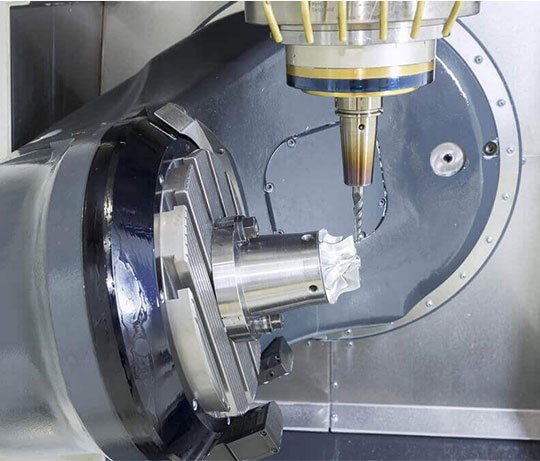
Some of the steps that can be taken to reduce the visibility of knife marks are as follows:
Adjusting the feed speed, the cutting speed, the cutting depth, and any other processing parameters in accordance with the characteristics of the material and the requirements of the processing is an important part of setting the processing parameters sensibly. This guarantees that the amount of cutting done is just right, falling between excessive and insufficient.
Utilize the appropriate cutting fluid, which includes selecting a cutting fluid that is suitable for both the material and the processing process, ensuring that the concentration of the cutting fluid is sufficient, and ensuring that any cutting fluid residue is cleaned up in a timely manner.
It is imperative to perform routine checks and maintenance on CNC machines and tools in order to ensure that they will function appropriately and produce the best possible results. The detrimental effects of tool pattern defects can be mitigated in a number of different ways, two of which are by modifying the tool path and improving the precision with which the tool matches up with the workpiece. In addition, the reasonable detection and correction of tool pattern defects can additionally help to lessen the impact of these issues.
During the cutting process, if the feed amount of the tool is not uniform, it will also lead to an uneven distribution of the cutting force, which will result in a knife pattern on the surface of the workpiece. If the feed amount of the tool is uniform, it will also lead to an even distribution of the cutting force. This can be avoided by keeping the feed amount of the tool uniform throughout the cutting process.
The following are some of the factors that can lead to inconsistent feed rates:
Errors brought on by the machine itselfIt's possible that the machine's accuracy and stability are to blame for the inconsistent feed rates it produces.
The problem with the knife pattern, which was caused by uneven feed, can be fixed by taking one or more of the following steps:
In order to achieve the optimal results from the machining trajectory, it is necessary for you to ensure that the design of the machining trajectory is rational and uninterrupted. You should also make an effort to avoid mutations and drastic changes in order to guarantee that the amount of feed that the tool receives in various areas remains consistent. This can be accomplished by ensuring that there are no mutations and no drastic changes.
The machine requires regular maintenance as well as calibration. Regular upkeep of the machine to ensure that its precision and consistency are maintained, as well as periodic calibration of the device whenever it is required to do so.
At the same time, the decision to use high-quality tools, the application of appropriate cutting fluid, and the upkeep of consistent processing conditions all impact the amount of tool grain produced and the elimination of uneven force distribution when cutting.